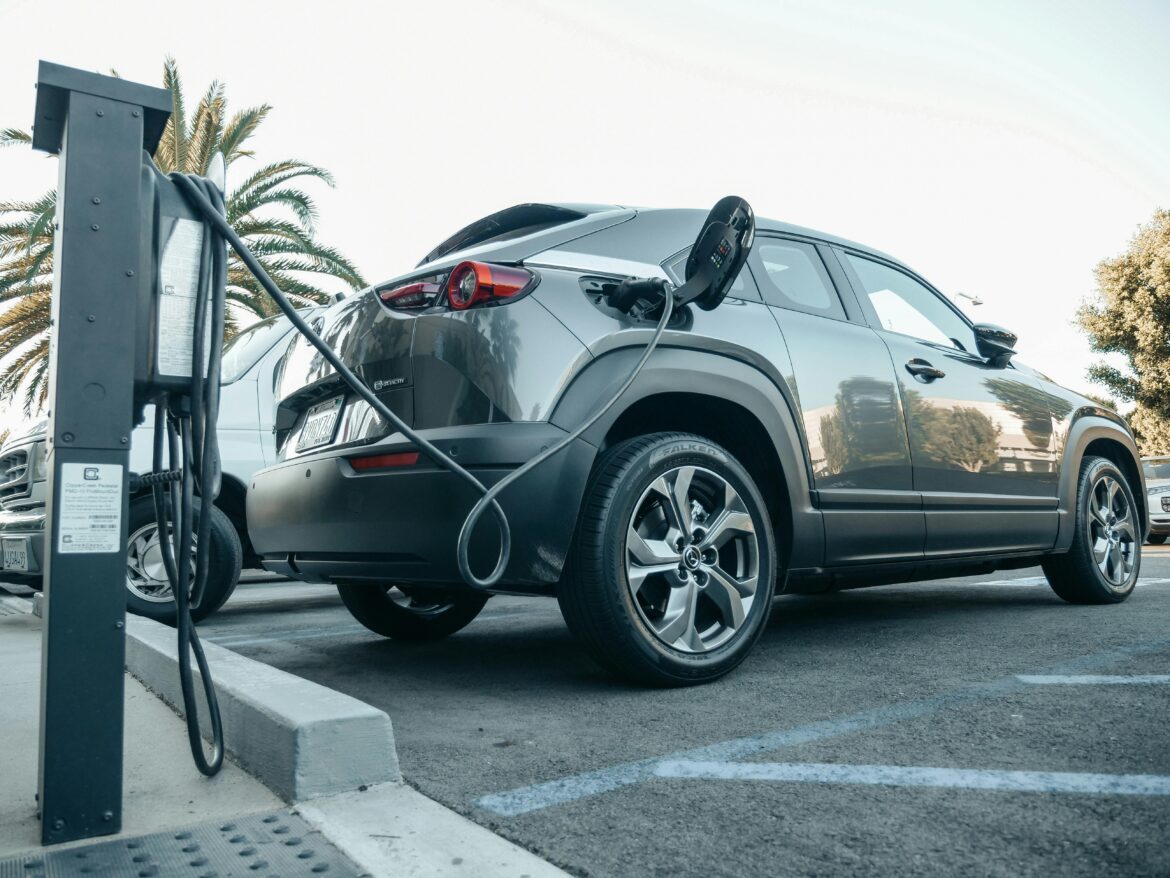
The automotive industry stands at a crossroads that extends far beyond environmental concerns. As electric vehicles transition from niche products to mainstream contenders, understanding their true economic proposition requires looking past sticker prices and government incentives to examine the complete financial picture over a vehicle’s lifetime.
The total cost of ownership—a metric encompassing purchase price, financing, fuel, maintenance, insurance, depreciation, and taxes—reveals a more nuanced story than simple MSRP comparisons suggest. For consumers, fleet managers, and investors alike, these economics are reshaping transportation decisions and creating ripple effects throughout the broader economy.
Beyond the Showroom: Understanding Acquisition Costs
The initial purchase price remains the most visible barrier to electric vehicle adoption. Industry data consistently shows EVs commanding premium pricing over comparable internal combustion engine vehicles, often ranging from $10,000 to $15,000 higher for similar vehicle classes. This gap, however, tells only part of the acquisition story.
Federal tax credits of up to $7,500 in the United States, along with various state and local incentives, can substantially reduce the effective purchase price. Yet these incentives vary dramatically by jurisdiction and manufacturer, creating a complex landscape where the same vehicle might carry vastly different net costs depending on where a buyer lives and which automaker produced it. Recent legislative changes have also introduced domestic content requirements and income caps, adding layers of complexity to what was already a intricate calculation.
Financing costs add another dimension. With interest rates fluctuating and loan terms extending longer—sometimes reaching 72 or even 84 months—the total amount paid over the life of an auto loan can significantly exceed the sticker price. EVs, despite their higher initial costs, sometimes qualify for preferential financing rates through manufacturer programs or green lending initiatives, partially offsetting their price premium.
The Fuel Equation: Volatility Versus Stability
Perhaps nowhere is the economic case for electric vehicles more compelling than in fuel costs, though the advantage varies considerably based on regional electricity prices and driving patterns. The typical EV owner in the United States might spend $500 to $700 annually on electricity for an average of 12,000 miles driven, compared to $1,500 to $2,500 for a comparable gasoline vehicle, assuming fuel prices in the typical historical range.
This calculation, however, depends heavily on charging behavior. Home charging during off-peak hours—when electricity rates are lowest—delivers maximum savings. Public fast charging, while convenient for long trips, can cost two to three times more per kilowatt-hour than residential rates, narrowing the economic advantage. For apartment dwellers or those without dedicated parking, relying primarily on public charging infrastructure can substantially erode the fuel savings equation.
Gasoline prices also introduce volatility that electricity costs generally avoid. While crude oil markets can swing dramatically based on geopolitical events, weather disruptions, or economic cycles, residential electricity rates tend to change more gradually through regulated utility rate cases. This predictability offers budgeting advantages that extend beyond simple dollar comparisons, particularly for commercial fleets managing hundreds or thousands of vehicles.
Maintenance: The Simplicity Premium
Electric vehicles’ mechanical simplicity translates into tangible maintenance advantages. Without oil changes, transmission services, spark plug replacements, or exhaust system repairs, EVs eliminate entire categories of routine maintenance. Industry estimates suggest EV owners might spend 40 to 50 percent less on maintenance over the vehicle’s lifetime compared to conventional vehicles.
Brake systems also benefit from regenerative braking technology, which uses the electric motor to slow the vehicle and recapture energy, significantly extending brake pad and rotor life. Some EV owners report minimal brake wear even after 100,000 miles, whereas conventional vehicles typically require brake service every 30,000 to 50,000 miles.
Battery replacement costs represent the most significant maintenance concern and the greatest source of uncertainty in long-term cost projections. While modern EV batteries are warrantied for eight years or 100,000 miles by federal regulation—and often longer by manufacturers—eventual replacement could cost $5,000 to $15,000 depending on the vehicle model. However, battery technology continues improving while costs decline, and real-world data increasingly suggests that many EV batteries retain sufficient capacity well beyond their warranty periods.
Insurance: Risk Assessment in Transition
Insurance costs for electric vehicles present a mixed picture. Higher vehicle values and expensive specialized parts, particularly battery packs, initially drove insurance premiums above those for comparable conventional vehicles. Repair facilities equipped to work on high-voltage systems remain less common, and technician training requirements add complexity to collision repairs.
However, this landscape is evolving. As EVs become more common, insurers have accumulated more actuarial data, and some companies now offer competitive or even preferential rates for electric vehicles. Advanced driver assistance systems, often standard on EVs, may qualify for safety discounts. Commercial fleet operators sometimes negotiate favorable rates based on lower accident frequency data for electric vehicles.
The insurance market continues adjusting as it learns which EV models prove more or less expensive to repair, which safety technologies provide genuine risk reduction, and how battery fire risks—though statistically rare—should be priced into premiums.
Depreciation: The Great Unknown
Resale value projections remain among the most uncertain variables in electric vehicle total cost of ownership calculations. Early EVs experienced steep depreciation as rapidly improving technology and expanding range made newer models substantially more attractive than their predecessors. A five-year-old EV with 100 miles of range holds little appeal when new models offer 300 miles at comparable prices.
However, several factors suggest this depreciation pattern may be moderating. As EV technology matures and range improvements slow, the gap between model years narrows. Strong demand for used EVs in certain markets, driven partly by buyers seeking to access older vehicles still eligible for used EV tax credits, has supported resale values. Additionally, battery longevity data demonstrating that capacity retention exceeds initial expectations has reduced buyer anxiety about purchasing used EVs.
Conventional vehicles face their own depreciation challenges as manufacturers announce increasingly aggressive electrification timelines. The prospect of gasoline vehicles becoming less desirable—whether through regulation, fuel costs, or consumer preference shifts—introduces depreciation uncertainty previously absent from traditional automotive markets.
The Break-Even Timeline
When does total cost of ownership favor electric vehicles over conventional alternatives? The answer depends entirely on individual circumstances, but general patterns emerge from the data.
High-mileage drivers reach break-even soonest. Someone driving 20,000 miles annually benefits more from fuel savings than someone driving 8,000 miles, potentially offsetting the higher purchase price within three to five years rather than six to eight. Commercial applications with high daily mileage—delivery vehicles, ride-hailing services, corporate fleets—often show favorable economics even in the first year when incentives and fuel savings are combined.
Regional factors matter enormously. States with high gasoline prices, low electricity rates, generous incentives, and extensive charging infrastructure create optimal economic conditions for EV ownership. Conversely, areas with cheap gasoline, expensive electricity, minimal incentives, and limited charging access extend the break-even timeline substantially.
Home charging access emerges as perhaps the single most important factor in EV economics. The combination of convenience and low electricity costs that home charging provides proves difficult to replicate through public charging alone, fundamentally altering the value proposition.
Implications Beyond Individual Ownership
Understanding total cost of ownership extends beyond consumer purchase decisions to influence corporate strategy, investment allocation, and policy development. Fleet operators increasingly adopt EVs not from environmental commitment alone but from recognition that operating economics favor electrification, particularly for vehicles with predictable routes and overnight charging opportunities.
Automotive manufacturers face strategic decisions about how aggressively to pursue electrification, balancing development costs against market demand and regulatory requirements. The total cost of ownership calculation influences not just whether consumers will buy EVs, but when mass-market adoption will occur and which vehicle segments will electrify first.
Energy companies and utilities must plan infrastructure investments based on projected EV adoption rates, while policymakers design incentive structures attempting to accelerate adoption where total cost of ownership alone proves insufficient to drive consumer behavior.
The Path Forward
As battery costs continue declining—having already fallen approximately 90 percent over the past decade—and manufacturing scales increase, the total cost of ownership equation will continue shifting in favor of electric vehicles for more buyers in more circumstances. The question evolves from whether EVs make economic sense to when they will reach parity broadly enough to drive mass adoption without policy support.
For individual buyers, the analysis requires honest assessment of personal driving patterns, charging access, and local incentive availability rather than relying on generalized comparisons. For the industry, the transition to electric vehicles represents not just a technological shift but an economic restructuring that will unfold over years rather than months, shaped by costs and benefits that extend well beyond the showroom floor.
The automotive future will ultimately be determined not by technology alone, but by the basic economic calculation that has always driven vehicle purchasing decisions: what truly costs less to own and operate over the years ahead.
